
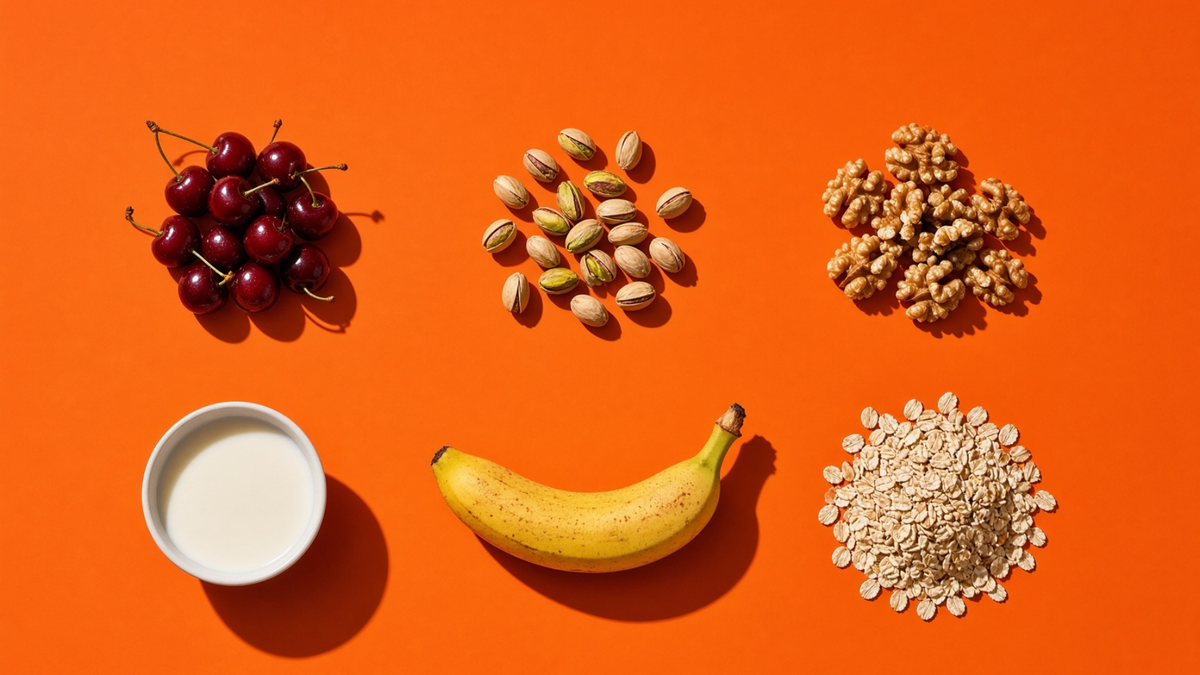
Melatonin occurs naturally in food. Whether food can deliver a useful amount
is a separate and more interesting question.
• Tart cherries, particularly Montmorency — the most cited dietary
melatonin source, usually studied as concentrated juice
• Pistachios — among the highest measured melatonin content of any
food by weight
• Walnuts and almonds — meaningful amounts, plus magnesium
• Oats, rice and barley — modest amounts, though whole grains contain
more than refined
• Milk, particularly milk collected at night, which contains more melatonin
• Eggs and fish, which measure higher than most other animal foods
• Tomatoes, grapes and mustard seeds
Pistachios and tart cherries are the standouts by a clear margin.

Food melatonin is measured in nanograms to low micrograms per serving. A
supplement tablet contains milligrams.
The gap is roughly a thousandfold. You are not going to eat your way to a 3 mg
dose — the quantity of pistachios required would create other problems
entirely.
So if you are hoping food replaces a supplement for shifting your body clock, it
will not.

Because melatonin content is not the only mechanism, and arguably not the
most important one.
Foods influence sleep through several routes:
• Tryptophan — an amino acid your body converts to serotonin and then
melatonin. Milk, eggs, poultry, pumpkin seeds and paneer are good
sources.
• Magnesium — involved in sleep-related pathways. Nuts, seeds, whole
grains and leafy greens.
• Carbohydrate timing — a modest carbohydrate portion helps tryptophan
cross into the brain, which is the actual mechanism behind the
traditional warm-milk-and-something advice.
• Stable blood glucose overnight, which reduces the likelihood of waking.
Tart cherry juice studies reporting sleep improvements likely work through a
combination of these rather than melatonin content alone.
• A small bowl of warm milk with a few soaked almonds — the traditional
advice, and mechanistically sound
• A handful of pistachios or walnuts about an hour before bed
• Dahi with a little fruit, giving tryptophan and a modest carbohydrate
portion
• Oats or dalia as a light dinner, particularly if you eat early
• Paneer in an early dinner, a strong tryptophan source
• Banana with a few nuts, giving magnesium, potassium and carbohydrate

• Caffeine after mid-afternoon — half-life is around five to six hours, so a
4pm chai is still working at 10pm
• Alcohol, which helps you fall asleep and then fragments the second half
of the night
• Very heavy or very spicy meals within two to three hours of bed, given
reflux risk when lying down
• Large volumes of fluid late, for obvious reasons
• High-sugar desserts, which can produce a glucose dip a few hours later

Under-discussed and genuinely impactful.
Eating a heavy meal close to bedtime means active digestion when your body is
trying to lower core temperature and wind down. Aim to finish dinner two to
three hours before sleep.
This is culturally difficult in India, where late dinners are common. Even shifting
from 10.30pm to 9pm is a meaningful change and costs nothing.
No food contains enough melatonin to act like a supplement. Anyone claiming
otherwise is not doing the arithmetic.
But food influences sleep substantially through tryptophan, magnesium and
meal timing. Eating well and finishing dinner earlier will do more for most
people than any single ingredient.
This article is for general information and is not medical advice. Consult a
qualified doctor or registered dietitian for personalised dietary guidance.
Perks, first drops, sleep science.
shut up & sleep
Also Available on


© 2026 ZIIST. All rights reserved.
theziist.com