
How Hormones Hijack Your Sleep (And What Finally Helped Me)
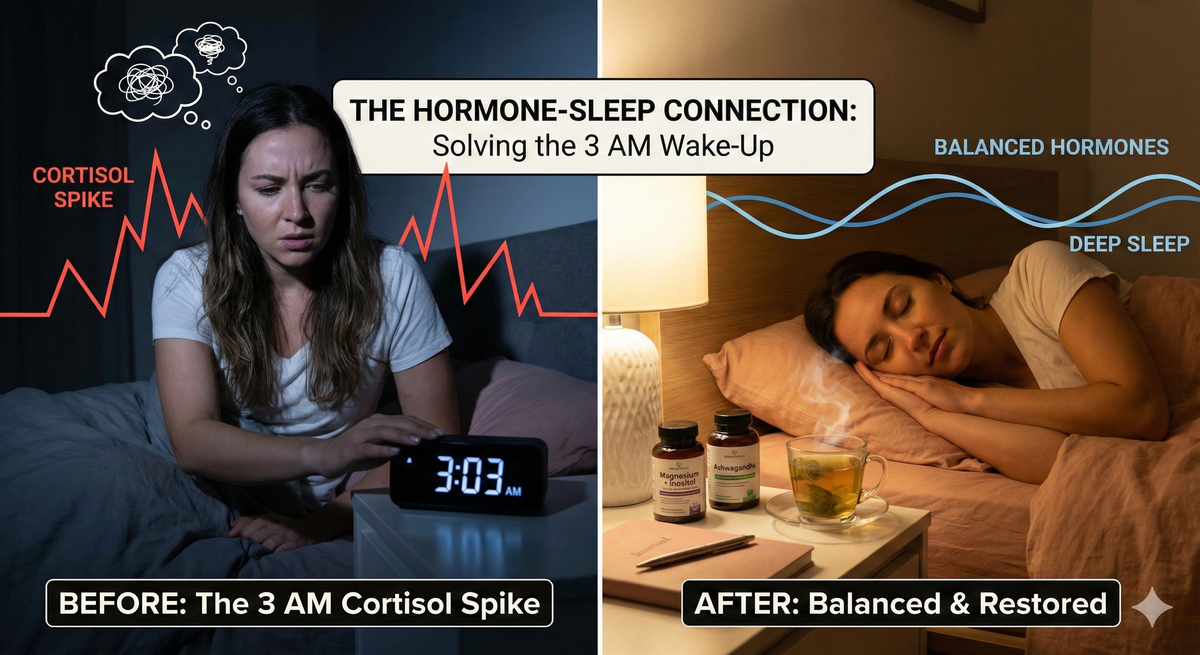
For over a year, I kept waking up at 3 AM for no reason. I’d fall asleep fine around 11, but like clockwork, I’d be wide awake in the middle of the night with my heart slightly racing and my mind already spinning.
Not every night, but often enough that it started feeling normal.
I tried everything: better sleep hygiene, no caffeine after noon, meditation apps, herbal teas. Nothing worked.
My doctor said it might be stress. My mom said I was overthinking. My friends said everyone has bad sleep phases.
But it didn’t feel random. It felt biological. Like my body had a built-in alarm that kept going off at the wrong time.
Then one day, while discussing my increasingly irregular periods, my gynecologist casually said, “Your hormones are probably affecting your sleep too.”
And everything clicked.
Once I dug deeper and actually spoke to doctors, it became obvious. Hormones run your sleep cycle. When they’re balanced, sleep feels effortless. When they’re not, everything goes off track.
Here’s what was happening in my body:
The calming hormone. When it drops, anxiety goes up and falling asleep gets harder.
Your stress hormone. It should be low at night. Chronic stress keeps it high, which creates that “tired but wired” feeling.
Affects temperature and mood. Too much relative to progesterone can cause insomnia and night sweats.
Your actual sleep hormone. Screens, stress and irregular routines suppress it.
Since I eventually learned I had PCOS, this made perfect sense. PCOS disrupts insulin, cortisol, estrogen, progesterone and even testosterone. A perfect storm for bad sleep.
No wonder I kept waking up at 3 AM.
Looking back, the clues were obvious:
Consistent 3 AM wake-ups: Often linked to cortisol spikes and blood sugar drops.
Worse sleep before my period: Classic progesterone dip.
“Tired but wired” nights: Cortisol refusing to calm down.
Occasional night sweats: A sign of estrogen dominance.
Sleeping 8 hours but feeling exhausted: Not enough deep sleep.
Irregular cycles: A direct connection to poor sleep quality.
Nighttime anxiety: More hormonal than emotional.
I thought these were separate issues. They weren’t. They were all symptoms of my hormones being out of sync.
I noticed many Indian women face the same pattern. There are reasons for it:
Constant stress and multitasking
Late dinners
Processed food and sugar in our diets
Non-stop screen exposure
Rising PCOS rates
A culture where rest isn’t a priority
Put this together and you get hormonal chaos—and terrible sleep.
Once I understood it was hormonal, my entire approach changed.
This combination made the biggest difference.
Magnesium calmed my nervous system.
Inositol supported insulin sensitivity and progesterone.
Together, they reduced the 3 AM wake-ups and helped me sleep deeper.
I took it in the evening to help manage cortisol. It didn’t make me sleepy, but it stopped me from feeling wired at night.
Not fancy. Just intentional.
Dimmed lights
Warm shower
Light stretching
Chamomile tea
Phone away an hour before sleep
These helped my hormones settle into a natural rhythm.
Moving dinner to 7:30–8 PM helped stabilize blood sugar and reduce those early-morning spikes.
Once I was diagnosed, things became clearer. I worked on:
A consistent sleep schedule
No caffeine after 2 PM
Daily movement
Actively managing stress
And yes, magnesium + inositol was especially helpful for PCOS.
Tracking my cycle alongside my sleep was eye-opening:
Period week: Sleep was average
After period (follicular phase): Best sleep
Ovulation: Slight dips
Before period (luteal phase): Worst sleep, most 3 AM wake-ups
This was straight-up progesterone dropping. Once I understood this, I made my routine stricter during that week.
I knew it was time when:
My periods became very irregular
I noticed facial hair growth
Sleep was getting worse
Anxiety was constant
My weight was shifting for no reason
Blood tests confirmed PCOS. My thyroid was fine, but my hormones needed support. Getting proper medical guidance helped more than anything.
If you’re dealing with unexplained sleep issues, consider your hormones—especially if:
Your sleep changes with your cycle
You wake up at the same time every night
You feel tired but wired
Your periods are irregular
You suspect PCOS
Normal sleep advice doesn’t help
It might not be “just stress.” It might be your hormones.
These made the most consistent difference:
Magnesium + Inositol every night
Ashwagandha most evenings
Occasional melatonin only to reset my schedule
Magnesium lotion on tense days
My sleep isn’t perfect, but it’s so much better.
3 AM wake-ups are rare
My sleep feels deeper
My mornings feel more normal
My cycles are more regular
My anxiety is manageable
Once I focused on hormones instead of “sleep hacks,” things started improving.
If your sleep feels unpredictable or unfixable, don’t ignore your hormones. Track your cycle. Pay attention to patterns. Support your nervous system. Get tested if needed. And don’t hesitate to get medical help.
Perks, first drops, sleep science.
Shut Up & SLEEP
© 2025 ZIIST. All rights reserved.
theziist.com