
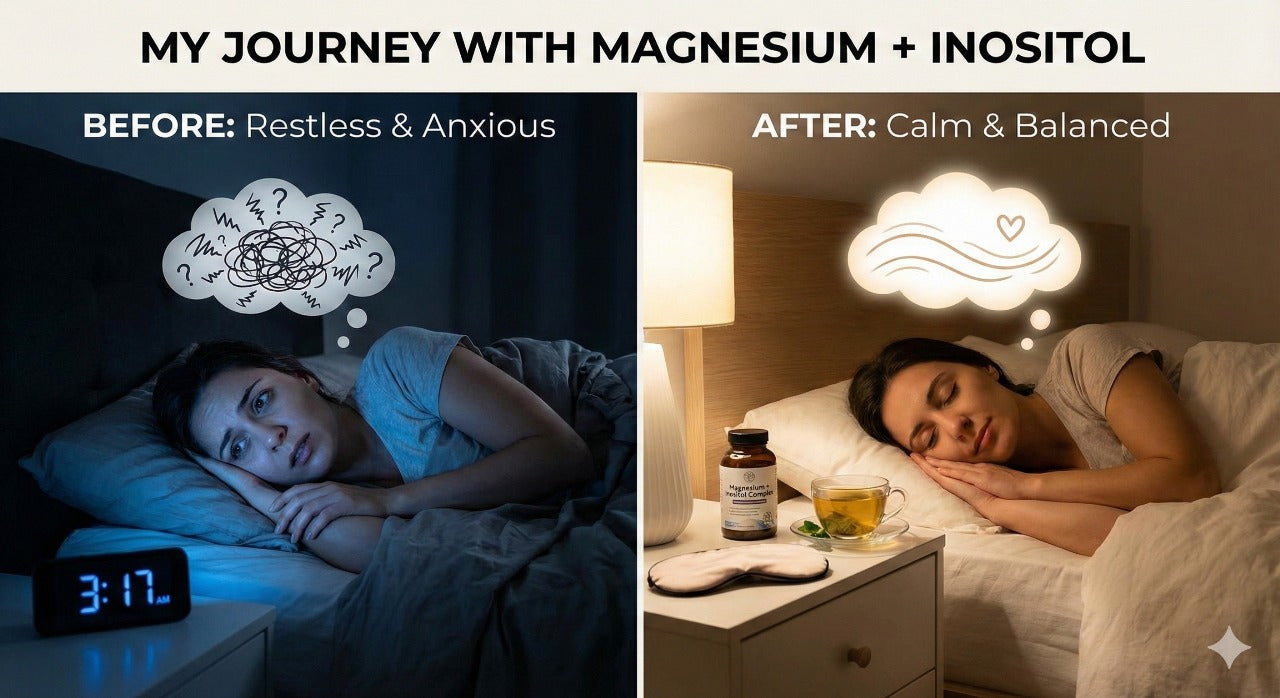
For months I kept seeing magnesium + inositol everywhere. Instagram wellness pages, friends, even my cousin’s gynecologist mentioned it.
At first I brushed it off as another supplement trend. But it kept showing up from people I actually trusted. So I finally did the research and tried it.
Turns out, the hype actually makes sense.
Magnesium
A mineral your body uses for hundreds of functions. It helps with:
Relaxing muscles
Calming the nervous system
Sleep quality
Stress regulation
Most of us don’t get enough because of stress and our modern diets.
Inositol
A vitamin-like compound that supports:
Hormone balance
Mood
Insulin sensitivity
Sleep regulation
The helpful forms are myo-inositol and D-chiro inositol, especially for women dealing with hormone issues.
Individually they help, but together they work even better.
I wasn’t expecting miracles. I just needed help with:
Restless sleep
Nighttime anxiety
Irregular periods
Feeling tired but mentally wired
Mood swings
Magnesium alone helped my body relax but didn’t calm my mind. A friend suggested adding inositol. I thought, why not?
Before combining them, magnesium alone gave me:
Less muscle tension
Slightly better sleep
Some relief from anxiety
But my mind still wouldn’t slow down at night.
Week 1: No major changes.
Week 2: My nighttime anxiety felt quieter.
Week 3: Sleep quality improved. Fewer wake-ups.
Week 4: Waking up rested more often. Clearer head.
6 weeks: Mood became steadier.
2–3 months: My period became regular for the first time in years.
Magnesium helps your body relax and lowers stress hormones.
Inositol helps your mind relax by supporting serotonin and stabilizing insulin (which affects hormones).
Together, they calm both the body and the mind.
It’s used widely for:
PCOS
Irregular periods
PMS and mood swings
Cravings
Anxiety
Hormone-related sleep issues
Even without a PCOS diagnosis, I noticed real benefits in mood and cycle regularity.
It doesn’t knock you out like melatonin. It works by supporting natural sleep:
Magnesium:
Relaxes muscles
Supports melatonin production
Lowers cortisol
Inositol:
Calms racing thoughts
Reduces nighttime anxiety
Supports the sleep-wake cycle
For me, this meant deeper sleep and waking up rested instead of wired.
About 1–2 hours before bed
With water or herbal tea
I take the full dose at night since sleep is my main goal
Some people split doses for hormone support, but evening works best for me.
Both are gentle nutrients your body already uses.
I had:
No stomach issues
No grogginess
No weird side effects
If you’re pregnant, on medication, or have health conditions, talk to a doctor first.
Sleep: 1–3 weeks
Anxiety: 2–3 weeks
Mood: 4–6 weeks
Periods/hormones: 2–3 months
Consistency is key.
Helps with sleep, anxiety, and hormones at the same time
Works with the body instead of forcing sleep
Safe and gentle
Doctors recommend it for PCOS and anxiety
People are getting real results
It’s not magic. It’s simply filling nutritional gaps many of us have.
It may help if you:
Have anxiety or racing thoughts at night
Wake up often
Have PCOS or irregular cycles
Experience PMS mood swings
Feel “tired but wired”
Want better sleep without harsh sleep meds
I’ve been consistent for over six months. I don’t plan to stop.
It wasn’t dramatic. It was gradual. But now:
My sleep is better
My mind is calmer
My mood is steadier
My cycle is regular
My baseline stress is lower
It’s become an important part of my routine.
The magnesium + inositol trend isn’t just hype. For many people, especially women dealing with sleep, anxiety, or hormone issues, it can make a big difference.
If you try it, give it time and take it regularly. The results are subtle, steady, and genuinely helpful.
Perks, first drops, sleep science.
Shut Up & SLEEP
© 2025 ZIIST. All rights reserved.
theziist.com