
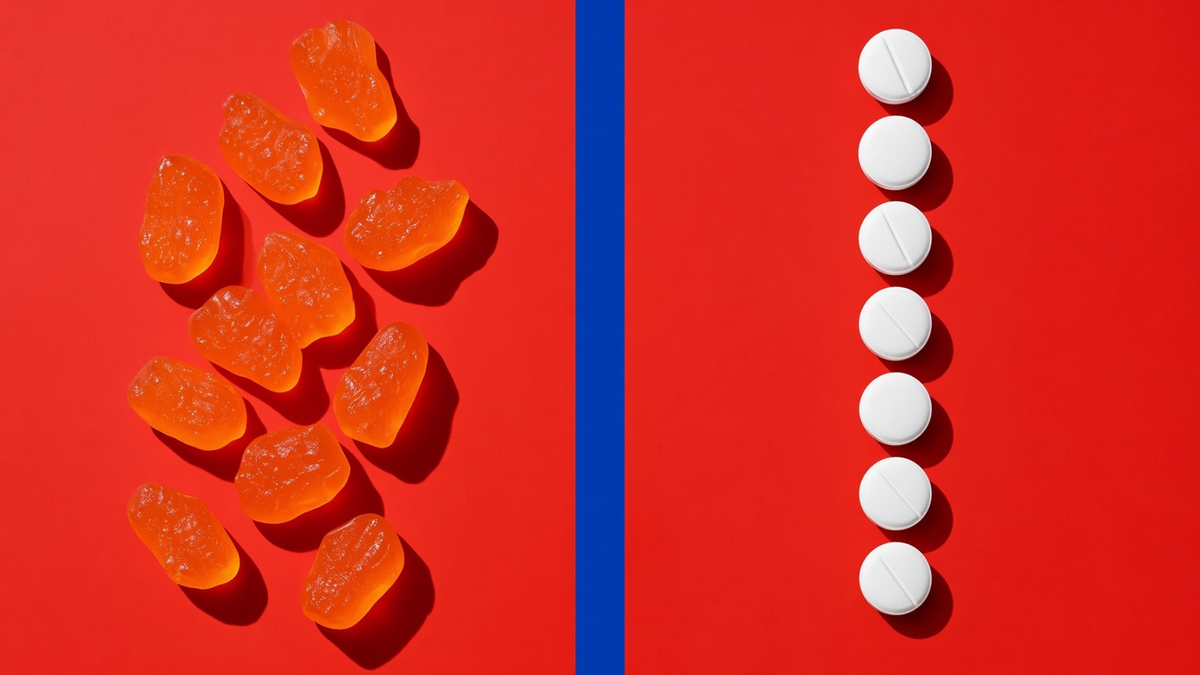
Melatonin gummies are winning in India on taste and convenience.
Whether they should be winning is a different question.
• They taste good, which sounds trivial but drives adherence more than
any other factor
• No water needed, no swallowing difficulty
• They feel less like medication, which matters to people uncomfortable
with pills
• They photograph well and market well, which explains the shelf space
Adherence is a genuine advantage. A supplement you actually take beats
one you abandon.

This is the trade-off nobody mentions.
Most melatonin gummies contain added sugar or sugar alcohols to be
palatable. Typically two to four grams of sugar per gummy.
Taken nightly, that is sugar immediately before bed, every night,
indefinitely. If you are managing weight, insulin resistance or dental
health — all highly relevant in India — that matters.
Sugar-free versions use sugar alcohols such as maltitol or sorbitol, which
can cause bloating and loose stools in some people. Neither option is neutral.

Tablets are manufactured under tighter dose control than gummies.
Gummy manufacturing involves heat and mixing, and melatonin content
can vary more between individual gummies in a batch. Independent
testing of melatonin gummies in various markets has repeatedly found
actual content differing meaningfully from the label — sometimes
substantially higher.
For a hormone where the guidance is to take the smallest effective dose,
unpredictable content is a real drawback rather than a technicality.

Gummies taste like sweets, which is precisely the problem.
It is considerably easier to take a second or third gummy than a second
or third tablet, because the psychological barrier is lower. That means
higher doses, more grogginess, and more of the effects covered
elsewhere.
This is a serious concern where children are in the house. Melatonin
gummies look like confectionery, and accidental paediatric ingestion of
melatonin has risen sharply in markets where gummies became popular.
If you keep gummies at home, store them out of reach as you would any
medication.
• More accurate and consistent dosing
• Splittable, so you can take 1.5 mg from a 3 mg tablet — impossible with a
gummy
• No added sugar or sugar alcohols• Cheaper per dose in most cases
• Longer shelf stability, which matters in Indian humidity
• Less likely to be mistaken for a snack
• Genuinely better adherence for people who dislike swallowing pills
• No water required, useful when travelling
• More pleasant as part of an evening routine
• Better for anyone with difficulty swallowing tablets

If you can take a tablet without difficulty, take a tablet. Better dose
control, no sugar, splittable, cheaper — and dose precision matters more
with melatonin than with most supplements.
Choose gummies if the alternative is not taking anything at all.
Adherence beats optimisation.
And whichever you choose, store it away from children.
This article is for general information and is not medical advice. Consult a
qualified doctor before starting melatonin, and never give melatonin to a
child without medical direction.
Perks, first drops, sleep science.
shut up & sleep
Also Available on


© 2026 ZIIST. All rights reserved.
theziist.com