
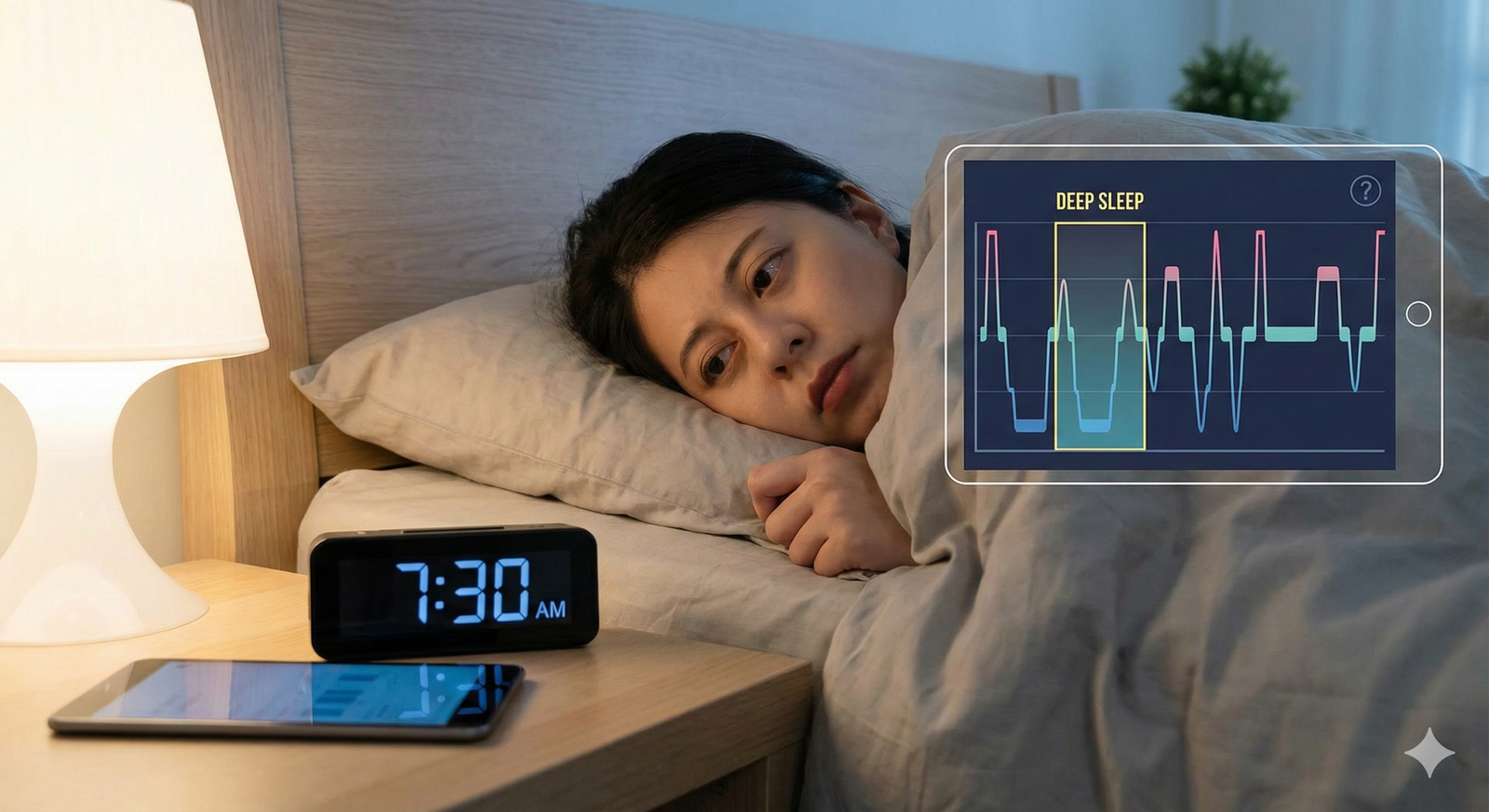
For the longest time, I couldn’t understand my sleep issues. I went to bed on time, slept 7–8 hours, and still woke up feeling awful. Heavy, groggy, drained. Like I hadn’t slept at all.
Everyone around me kept saying, “Just sleep more.”
But I was already sleeping plenty. So why did I feel worse than people who barely slept six hours?
Turns out, the problem wasn’t the number of hours. It was the quality of my sleep. And once I learned about deep sleep, everything clicked.
I had no idea there were stages of sleep until I started researching why I felt so terrible every morning.
Your sleep cycles have three main stages:
• Light sleep
• REM (dreaming)
• Deep sleep
Deep sleep is the stage where your body switches to full repair mode.
It’s when your body:
• Heals muscles
• Balances hormones
• Strengthens immunity
• Clears waste from the brain
Adults need around 1.5 to 2 hours of deep sleep every night. I was barely hitting 40 minutes.
No wonder I felt wrecked every morning.
Looking back, the signs were obvious:
I’d wake up tired, stay tired, and go to bed tired.
Work felt harder, I forgot things, and my focus was gone.
Neck, shoulders, back — everything felt tense and sore.
I was irritable, overwhelmed, and randomly low for no reason.
I’d catch every cold. My body wasn’t recovering at night.
Sugar, carbs, junk food — especially in the evening.
At the time, I thought I was stressed or just “adulting.”
In reality, I was sleeping, but not recovering.
Once I started paying attention, I realized I was doing everything wrong:
• Late dinners
Eating at 9:30–10 PM kept my digestion active.
• Evening chai
Caffeine at 5 PM was still in my system at bedtime.
• Scrolling till I passed out
Phone screens completely messed with melatonin.
• No routine
Different sleeping hours every day confused my body clock.
• Stress and overthinking
My mind wouldn’t switch off.
• Nutrient deficiencies
I wasn’t eating well or getting enough magnesium.
Basically, I was sabotaging my deep sleep without knowing it.
I didn’t change everything at once. I started small:
Lower temperature helped me sleep deeper and wake up less.
When I kept my phone away, the difference was real.
Not perfect, but enough to create rhythm.
Soft lighting helped my brain wind down naturally.
These simple changes made mornings slightly less miserable.
Everyone kept talking about magnesium, so I finally tried it.
Within two weeks, I noticed a real difference:
• My muscles relaxed
• I stopped waking up repeatedly
• I fell asleep faster
• My mornings didn’t feel like torture
• My mind felt calm instead of wired
Magnesium glycinate worked best for me. Some nights I also use a magnesium lotion on my neck and shoulders.
This isn’t perfect, but when I follow it, I sleep far better:
Nothing heavy or spicy.
Painful at first. Worth it later.
Soft lighting sets the mood for sleep.
Relaxes my body and helps me shift into “wind-down” mode.
Non-negotiable now.
Reading, stretching, or chamomile tea. No screens at this point.
Hardest habit, but the most effective one.
With rain sounds or brown noise sometimes.
• Chamomile or lavender tea
• Ashwagandha on stressful days
• Moving workouts to the morning
• Lighter meals at night
• Lavender diffuser for relaxation
None of these were magic on their own, but together they helped my body shift into deeper sleep.
Over time, I noticed real changes:
• I wake up refreshed more often
• Focus and clarity returned
• My mood is more stable
• I get sick less often
• Sugar cravings reduced
• Weight management became easier
• I feel more present and energized
It’s wild how much deep sleep affects everything.
Here’s what helped me personally:
Great for deep sleep, muscle relaxation, and stress.
Good for anxiety and hormonal balance.
Use sparingly. Helps reset your clock.
Useful during stressful periods.
Lifestyle changes won’t fix everything. You need medical help if:
• You stop breathing during sleep
• You have severe or long-term insomnia
• Nothing improves even after weeks of changes
• Your sleep issues impact your daily life
Sleep apnea especially needs professional attention.
• If you’re sleeping enough but still tired, focus on deep sleep, not hours.
• Start with small changes — cold room, early dinner, fixed schedule.
• Try magnesium for two weeks before judging it.
• Build a bedtime routine that feels calming.
• Give it time. Sleep resets aren’t instant.
Deep sleep affects your mood, energy, brain, immunity, weight, everything. It’s worth the effort.
For years, I thought waking up tired was normal. It wasn’t. I just wasn’t getting proper deep sleep.
Once I learned how sleep actually works, everything changed. I didn’t fix things overnight, but consistent habits and a better routine helped me reclaim my mornings.
You deserve to wake up feeling human, not exhausted.
You deserve deep, restorative sleep.
And you can get there with the right habits and a little patience.
Here’s to finally waking up refreshed.
Perks, first drops, sleep science.
Shut Up & SLEEP
© 2025 ZIIST. All rights reserved.
theziist.com