
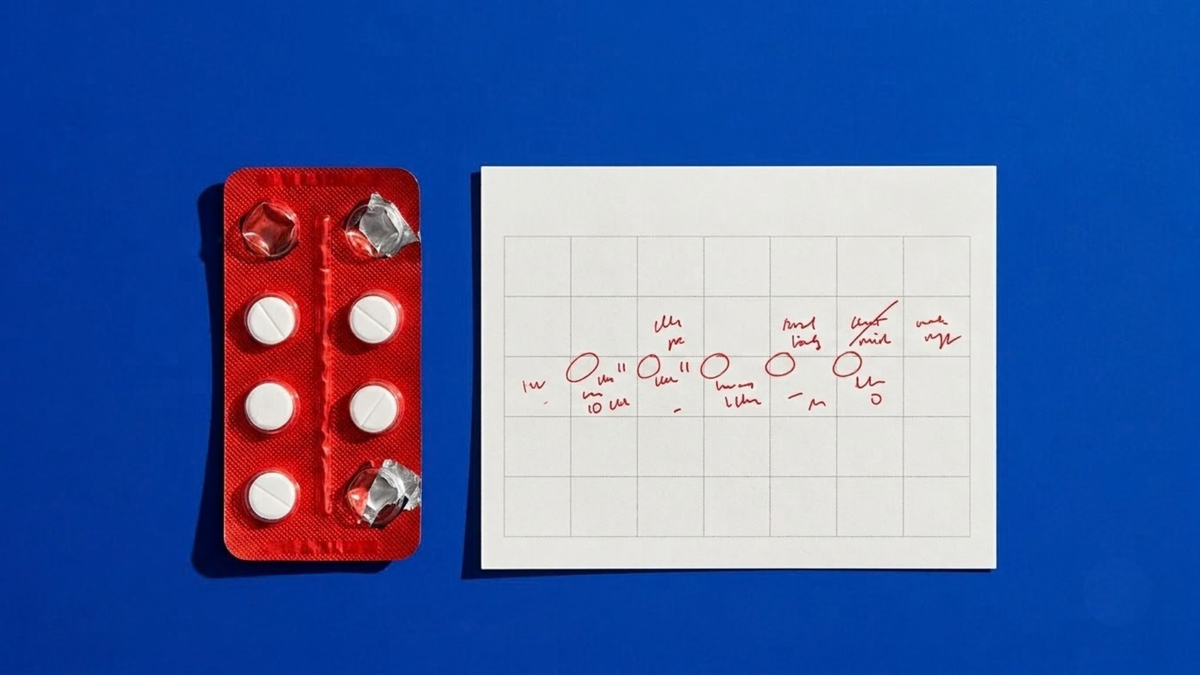
This covers the three mechanisms that turn a short-term prescription into a long-term problem. They are well documented and they are not the patient's fault.
IMPORTANT: never stop prescribed sleep medication abruptly or without your doctor. Abrupt withdrawal from some sedatives can be dangerous.
Your nervous system adapts to a drug's presence. With sedatives acting on GABA receptors, repeated exposure leads to receptor changes that reduce the drug's effect.
The practical result: the dose that worked in week one works less well in week six.
The intuitive response is to increase the dose. That restores the effect temporarily, and then tolerance develops again at the higher level. This is how escalation begins, and it is a pharmacological process rather than a failure of willpower.

As your nervous system adapts, it begins to rely on the drug's presence to maintain balance. Remove it and that balance is disrupted.
Dependence is not the same as addiction. It can develop in someone taking exactly what was prescribed, exactly as directed. It is a physiological adaptation, not a behavioural problem.
Withdrawal symptoms can include anxiety, agitation, tremor, sweating, and in more serious cases with some sedatives, seizures. This is precisely why stopping requires medical supervision.
The mechanism that traps people, and the one least often explained to them.
When you stop a sedative, sleep frequently becomes worse than it was before you started — sometimes markedly worse — for a period.
It feels like proof that the medication was necessary and the underlying insomnia was severe. It is actually withdrawal, and it is temporary.
Not knowing this, many people restart the medication, conclude they cannot manage without it, and continue for years. Understanding that rebound is expected and time-limited is genuinely one of the most useful things to know before starting.

Short course prescribed for acute insomnia
It works, and sleep improves
Tolerance develops, and it works less well
Dose increases, or a second medication is added
An attempt to stop produces rebound insomnia
Rebound is interpreted as the original problem returning
Medication resumes, and long-term use becomes established
At no point does anyone do anything unreasonable. The pharmacology produces the pattern.

If your doctor prescribes sleep medication, reasonable things to discuss:
How long is this intended for, and what is the plan to stop?
Should I take it every night or only on the worst nights?
What should I expect when I stop, and how should I taper?
Can I access CBT-I alongside or instead?
What interactions should I know about, particularly alcohol?
Intermittent rather than nightly use, where clinically appropriate, reduces tolerance development. This is a conversation worth having at the point of prescription rather than a year later.
This is common and it is manageable. It is not a personal failing.
Do not stop abruptly. With some sedatives this is genuinely dangerous.
Speak to the prescribing doctor about a gradual taper
Expect rebound insomnia during the taper and know it is temporary
CBT-I alongside a taper improves outcomes and is worth requesting
Tapers are often measured in months rather than weeks, and slower is generally better tolerated
This article is for general information and is not medical advice. Never stop or adjust prescription medication without your doctor. If you are struggling with dependence, please speak to a doctor — this is a common clinical situation and there is a clear path through it.

Perks, first drops, sleep science.
shut up & sleep
Also Available on


© 2026 ZIIST. All rights reserved.
theziist.com