
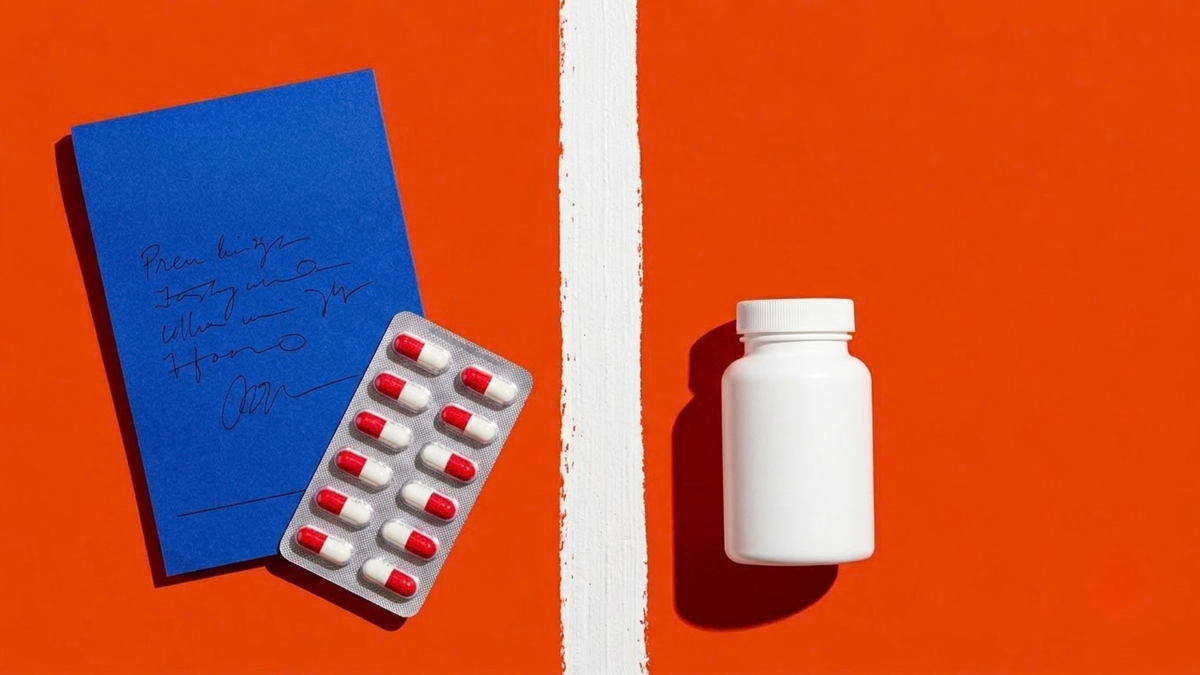
The regulatory picture in India confuses a lot of people, partly because enforcement at the pharmacy counter varies. Here is how it is meant to work and why it matters.
Sedative sleep medications — benzodiazepines and Z-drugs — are prescription-only in India and several are subject to additional controls as psychotropic substances.
That means a registered medical practitioner must prescribe them, pharmacies are required to see and retain the prescription, and refills are controlled.
These controls exist because of the dependence, tolerance and withdrawal risks documented elsewhere in this cluster. They are not bureaucratic obstacles.

In practice, enforcement is inconsistent, and it is not difficult in many places to obtain sedatives without a prescription.
Being direct about why that is a problem rather than a convenience:
No assessment of whether your sleep problem is actually insomnia. Sedating someone with untreated sleep apnoea can worsen it.
No check for interactions with medication you already take
No monitoring of dose escalation or dependence
No plan for stopping, which is where most of the harm occurs
No investigation of an underlying cause — depression, thyroid dysfunction, anaemia, chronic pain
Counterfeit and substandard medicines are a real risk outside the formal supply chain
The prescription is not the barrier. The assessment behind it is the point.

Melatonin — sold in India as a nutraceutical or food supplement, and also available in pharmaceutical preparations
Magnesium and other mineral supplements
Herbal preparations including valerian, chamomile and ashwagandha
Some sedating antihistamines, sold for other indications but sometimes used for sleep
On that last point: sedating antihistamines are widely used off-label for sleep in India. They cause next-day grogginess, tolerance to the sedative effect develops quickly, and anticholinergic effects are a particular concern in older adults. Being available without prescription does not make them a good long-term sleep strategy.
Supplements should carry an FSSAI licence number
Pharmaceutical preparations carry a drug licence number and manufacturer details
Check batch number and expiry on anything you buy
Buy from established pharmacies rather than informal sellers
Be cautious with online sellers offering prescription medication without a prescription — that is a clear signal about the rest of their operation

Worth a specific note since it is the most commonly bought sleep aid in India.
Melatonin is classified differently across countries — a supplement in some, a prescription medicine in others. In India you will find it both as a food supplement and in pharmaceutical preparations.
The practical implication: check which you are buying. If it is a pharmaceutical preparation, take it as directed by a doctor or pharmacist rather than self-dosing as a supplement. If it is a food supplement, confirm the FSSAI licence and check the dose, since imported products are often at strengths higher than most people need.
If your sleep is bad enough that you are considering sedatives, see a doctor. Not because of regulation, but because you will get an assessment.
That assessment may identify sleep apnoea, a thyroid problem, depression, a medication side effect, or a circadian issue — none of which a sedative fixes, and all of which are treatable.
Ask about cognitive behavioural therapy for insomnia. It has stronger evidence than medication for chronic insomnia and is substantially under-used in India.
This article is for general information and is not medical advice. Never take prescription medication that was not prescribed to you.

Perks, first drops, sleep science.
shut up & sleep
Also Available on


© 2026 ZIIST. All rights reserved.
theziist.com