
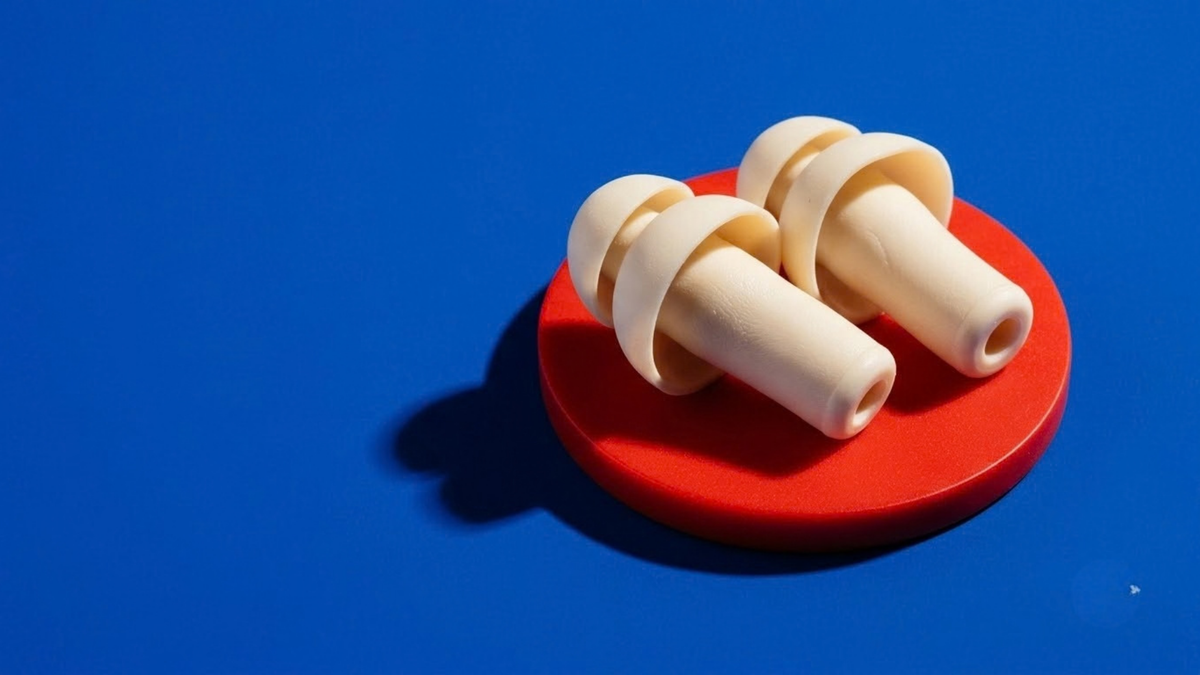
Silicone is the format most people settle on for nightly use, and the one most people fit incorrectly on the first attempt.
Mouldable silicone putty is warmed between the fingers, shaped into a ball, and pressed over the canal opening to form a seal. It does not go inside the canal.
Pre-moulded silicone plugs are shaped, often with flanges, and insert into the canal entrance. Reusable and easier to handle.
The key difference: mouldable seals over the opening, pre-moulded seats inside it. If pressure inside the canal is what you dislike about foam, mouldable is the one to try.

Warm the putty between clean fingers until pliable
Shape into a smooth ball slightly larger than the ear opening
Pull the outer ear gently up and back to straighten the canal entrance
Press the putty flat over the opening — do NOT push it into the canal
Smooth the edges so it seals against the surrounding skin
It should sit flush, not protrude
The most common error is trying to insert it like foam. It is a cover, not a plug.
Pull the outer ear up and back
Insert gently with a slight twist until it seats
Stop as soon as you feel a seal — never force it deeper
If it will not seat, the size is wrong. Many people need different sizes in each ear.
Test by talking: your voice should sound noticeably muffled and internally resonant
The main practical advantage over foam.
Foam plugs typically protrude from the ear, so lying on your side presses them further in, which is uncomfortable and can push them deeper than intended.
Silicone plugs, particularly mouldable ones, sit flush or nearly flush. Pillow pressure spreads across the ear rather than driving the plug inward.
Given that most people sleep on their side, this is a bigger deal than the noise rating difference.

Reusability is the advantage and the risk. A warm, moist plug placed into the ear nightly needs care.
Wash pre-moulded plugs with mild soap and water regularly, and dry them completely before storage
Replace mouldable putty when it stops holding shape or collects debris
Always store in a case, never loose in a bedside drawer
Never share earplugs with anyone
Wash your hands before handling them
Do not use them if your ears are wet after a shower
Poor hygiene here is a genuine route to outer ear infection, which is unpleasant and entirely avoidable.

Never push any earplug deep into the canal
Remove slowly with a gentle twist — pulling fast creates a suction effect against the eardrum
If a plug feels stuck, do not dig for it. See a doctor.
Do not use if you have an ear infection, a perforated eardrum, or recent ear surgery
Stop and see a doctor for ear pain, discharge, itching, ringing or any hearing change
Earwax can be pushed deeper with regular use — if you are prone to impaction, discuss regular earplug use with a doctor

Worth stating clearly. Earplugs reduce noise; they do not eliminate it, and you should not want them to.
If you need to hear a child, a doorbell, an alarm or a smoke detector, choose moderate reduction and test that you can still hear those before relying on them nightly.
This article is for general information and is not medical advice. Consult a doctor about persistent ear symptoms or before regular use if you have a history of ear problems.
Perks, first drops, sleep science.
shut up & sleep
Also Available on


© 2026 ZIIST. All rights reserved.
theziist.com