
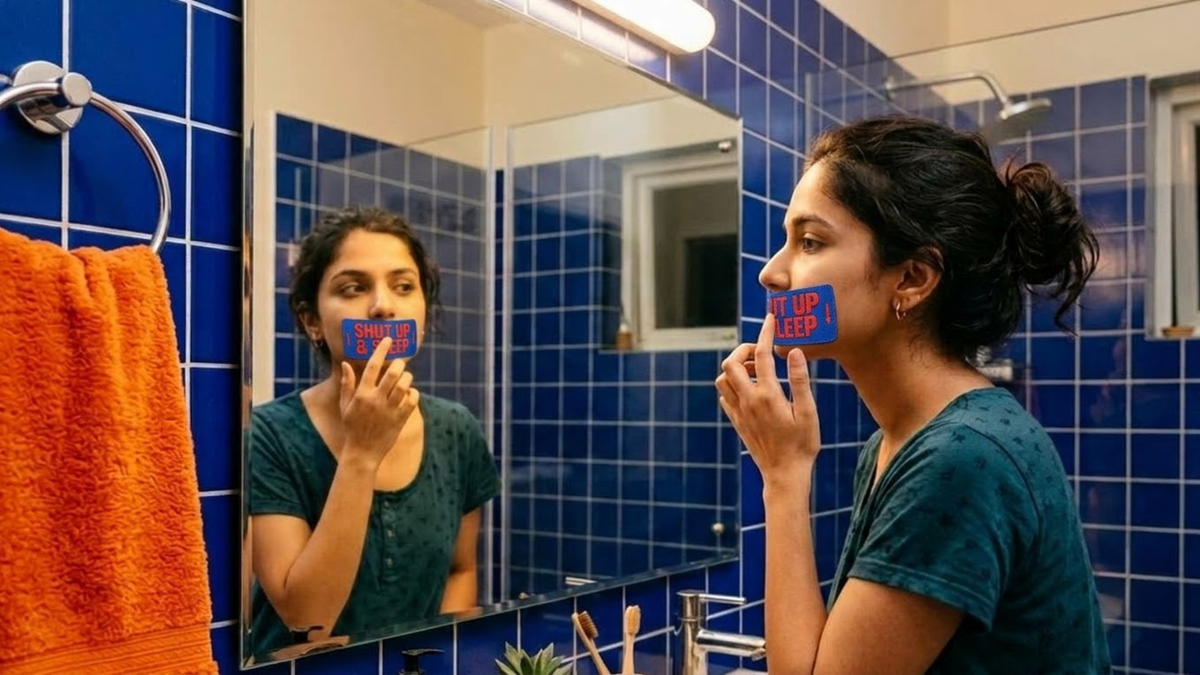
Mouth taping went viral as a snoring cure. The reality is narrower but still useful: for the right person, it can noticeably reduce snoring. For the wrong person, it does nothing – or isn't safe.
When your mouth falls open during sleep, the jaw drops, the tongue moves back and the soft palate vibrates more freely. A gentle tape across the lips keeps the mouth closed, encouraging breathing through the nose. Nasal airflow is smoother and keeps the airway in a more stable shape.

· Anyone with suspected or diagnosed sleep apnoea unless a doctor approves
· People with a blocked nose, cold, sinus infection or severe allergies
· Anyone who feels anxious or short of breath with their mouth closed
· After drinking alcohol or taking sedatives
· Children
Small studies in mild sleep apnoea and mouth-breathing snorers found reduced snoring intensity with mouth taping. The research is early and small-scale, so think of it as a reasonable tool for mouth snorers, not a proven cure.

1. Check your nose: breathe through it for two minutes with your mouth closed. If that's hard, don't tape.
2. Practise for 20 minutes while awake – reading or watching something – before your first night.
3. Use a gentle, skin-friendly tape designed for sleep, not office or medical tape.
4. Apply to clean, dry, balm-free lips so it sits flat.
5. Give it a week. The first night or two can feel strange.
Shut It uses soft hydrogel with aloe vera and vitamin E, so it holds the lips closed without the sharp pull of regular tape and peels off comfortably in the morning. One pack gives you 15 nights to test whether you're a mouth snorer it helps.

If snoring is unchanged after a week, mouth breathing probably isn't your main cause. Look at sleep position, nasal congestion or – if there are warning signs – sleep apnoea.

Perks, first drops, sleep science.
shut up & sleep
Also Available on


© 2026 ZIIST. All rights reserved.
theziist.com