
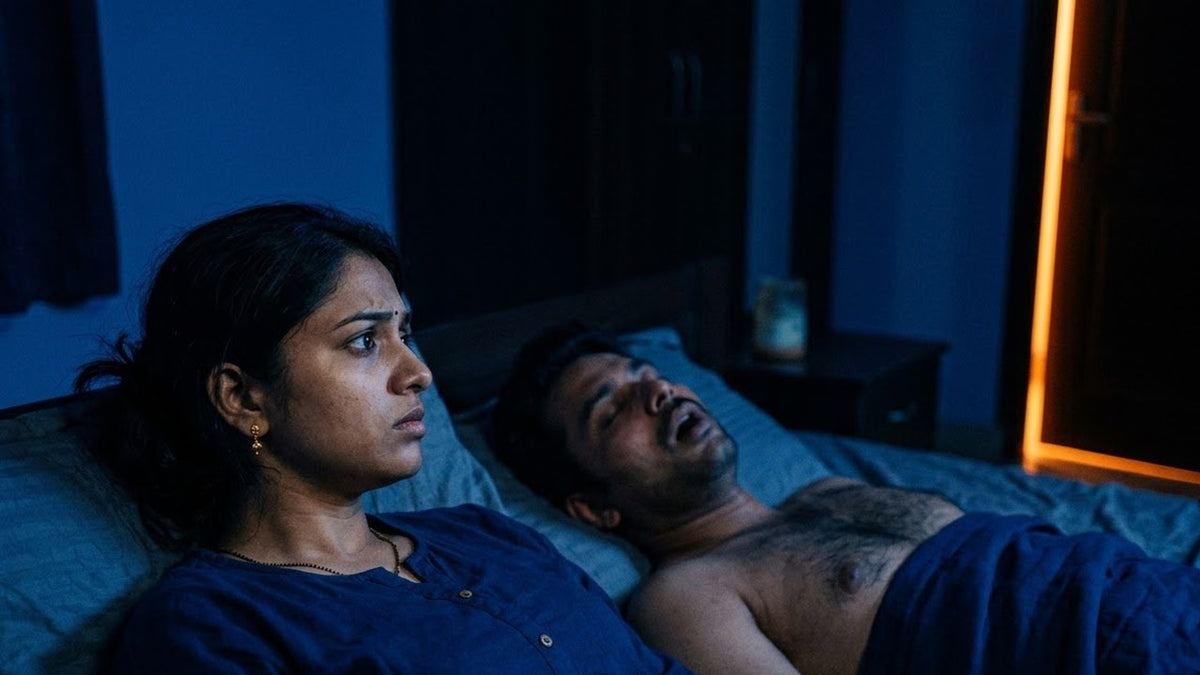
Short answer: most snoring isn't dangerous to the snorer – it's mainly a problem for whoever shares the room. But some snoring is a symptom of obstructive sleep apnoea (OSA), and that is a genuine health risk. The key is telling them apart.
Simple or "primary" snoring means noise without breathing interruptions. You sleep, you breathe steadily, you wake feeling reasonably rested. The main costs are social: a tired partner, separate rooms, holiday embarrassment.
In OSA, the airway doesn't just narrow – it closes, repeatedly. Breathing stops for ten seconds or more, oxygen drops, and the brain briefly wakes you to restart breathing. This can happen dozens of times an hour without you remembering.
Untreated OSA is linked to high blood pressure, heart disease, stroke, type 2 diabetes and a higher risk of road accidents from daytime sleepiness. Studies suggest it's common in India and that most cases are undiagnosed.

· Your partner notices pauses in breathing, followed by gasping or choking
· You're very sleepy during the day despite a full night in bed
· Morning headaches or a dry, sore throat most days
· Waking frequently to urinate at night
· High blood pressure that's hard to control
· Difficulty concentrating, irritability or low mood
Snoring plus two or more of these is a reason to see a doctor.

Men, people over 40, people with a larger neck size, those carrying extra weight, people with a family history of OSA, and women after menopause.

A doctor may recommend a sleep study, either overnight in a lab or with a home testing kit, now widely available in Indian cities. Treatment ranges from weight loss and positional therapy to CPAP machines and oral devices.

If there are no warning signs, it's a quality-of-life issue you can work on: side sleeping, nasal care, less alcohol and better sleep habits. Our Prime Sleep Club weekly sleep circles cover habit change in a supportive group if you want accountability.
Perks, first drops, sleep science.
shut up & sleep
Also Available on


© 2026 ZIIST. All rights reserved.
theziist.com