
A healthy adult takes about 10–20 minutes to fall asleep. If it's routinely taking you 45 minutes or more, something is working against you. The good news: the biggest causes are usually fixable without pills.
· Your body clock is late. Late screens, late meals and weekend lie-ins push your internal clock later. You're trying to sleep before your body is ready.
· Your mind is still "on". Work messages, scrolling and planning tomorrow keep your stress system active.
· You're not sleepy enough. Long naps, too much caffeine or a sedentary day reduce sleep pressure.
· Your room works against you. Too warm, too bright or too noisy.

1. Fix your wake time first. Getting up at the same time every day, weekends included, is the fastest way to make falling asleep easier. Get 10 minutes of daylight soon after waking.
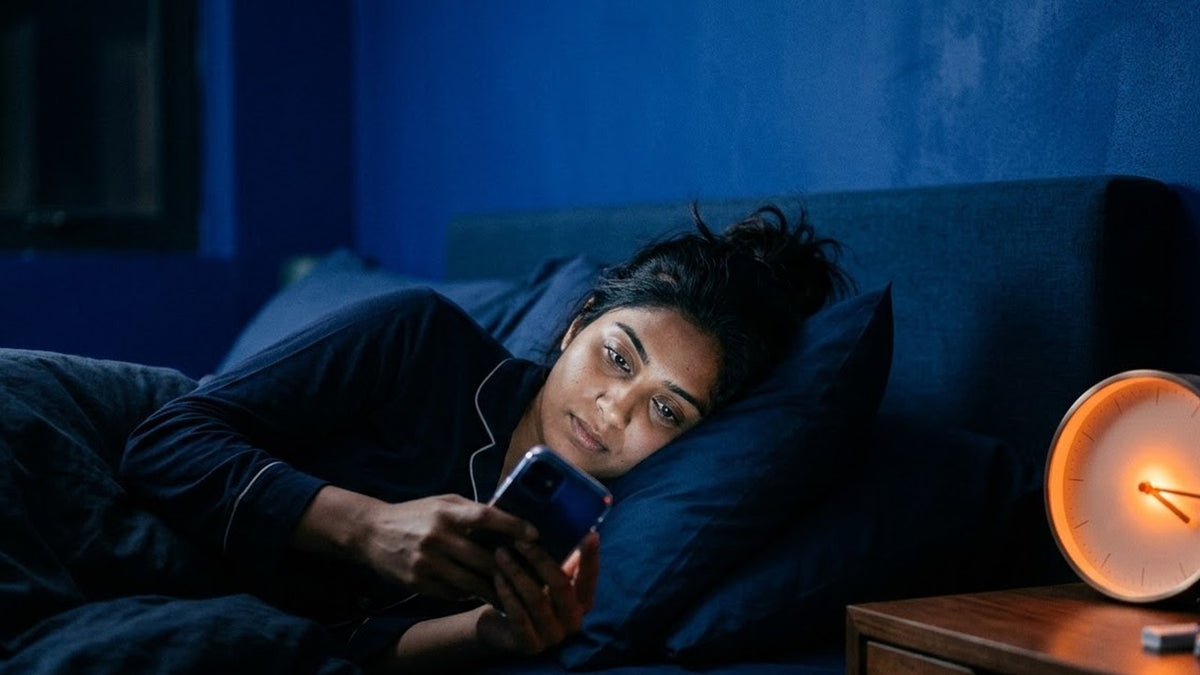
2. Dim the last hour. Bright light, especially from phones, delays melatonin. Switch to warm, low lights and put the phone outside arm's reach for the final 30–60 minutes.
3. Cool down. Your body temperature needs to drop to start sleep. A cooler room (fan or AC around 24–26°C) and a warm shower an hour before bed both help.

4. Cut caffeine after 2 pm. Caffeine's half-life is about five to six hours. That 5 pm chai can still be active at bedtime.
5. Build a wind-down ritual. The same short sequence every night – shower, skincare, a page of a book, a pillow spray – trains your brain to link those cues with sleep.
6. Get out of bed if you can't sleep. After about 20 minutes awake, go somewhere dim and do something boring until you feel sleepy. This stops your bed becoming a place for frustration.

If your problem is a body clock that has drifted late – common with late-night work and doomscrolling – low-dose melatonin can help shift it earlier when timed 60–90 minutes before your target bedtime. Crash Out combines low-dose melatonin with magnesium glycinate, ashwagandha and L-theanine for exactly these chaotic-schedule nights. It works best alongside the habits above, not instead of them.
If falling asleep takes more than 30 minutes, three or more nights a week, for three months or longer, that meets the definition of chronic insomnia. CBT-I (cognitive behavioural therapy for insomnia) is the first-line treatment and is worth asking about.

Perks, first drops, sleep science.
shut up & sleep
Also Available on


© 2026 ZIIST. All rights reserved.
theziist.com