
October 06, 2025 · sunidhi srivastava
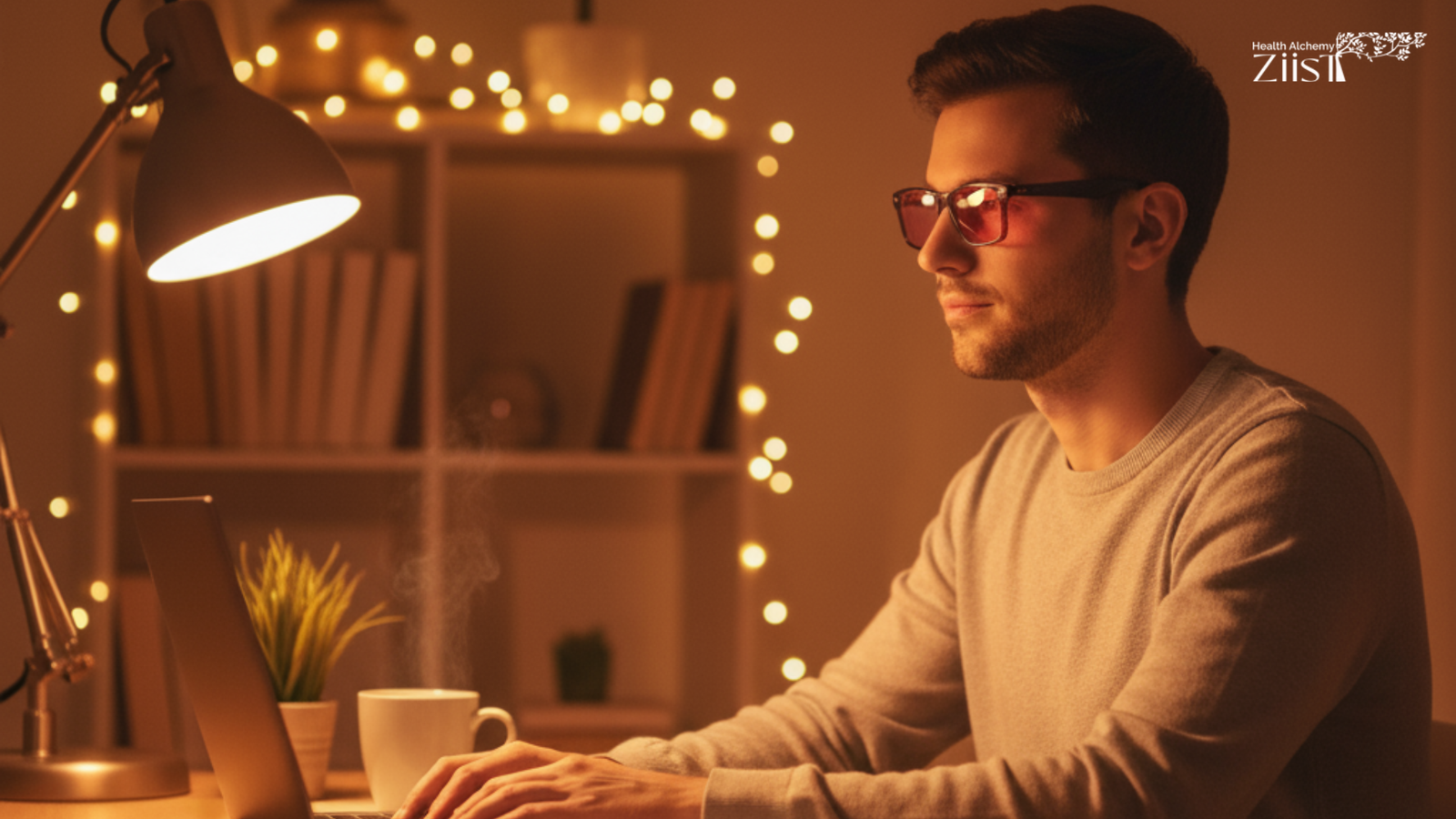
From smartphones to laptops and televisions, blue light is everywhere — and it’s silently affecting how we sleep and how our eyes feel at the end of the day. This constant exposure to high-energy visible (HEV) light can disturb sleep cycles, cause digital eye strain, and even contribute to fatigue.
That’s where Blue Light Blocking Red Shades step in. These specially designed red-tinted glasses are a natural, non-invasive way to protect your vision, restore healthy sleep patterns, and promote eye comfort — all without medication or supplements.
As more Indians struggle with sleeplessness, headaches, and screen-induced fatigue, red-tinted blue light glasses are becoming the go-to wellness accessory for holistic digital health.

Blue light blocking red shades are eyewear fitted with red or amber-tinted lenses that filter out short-wavelength blue light (400–500 nm).
Unlike regular computer glasses that only block a fraction of blue light, red-tinted lenses provide stronger filtration, effectively protecting your circadian rhythm — the internal “clock” that controls your sleep and wake cycle.
When worn in the evening, especially 2–3 hours before bed, they signal your brain to wind down naturally, making them ideal for night readers, gamers, and professionals who spend long hours on digital devices.
Blue light exposure suppresses melatonin — your body’s sleep hormone. Red shades filter out this disruptive light, helping your brain release melatonin naturally and improving your sleep quality over time.
Your sleep–wake cycle depends on light cues. Wearing red shades at night reduces blue-light interference, keeping your circadian rhythm balanced and promoting consistent, restorative sleep.
Blue light keeps the brain alert — bad news before bedtime. Red shades reduce that stimulation, helping you feel calm and ready for sleep.
Studies show that limiting blue light before bed increases deep and REM sleep stages — the periods when your body repairs, detoxifies, and consolidates memories.
Blue light penetrates deeply into the retina, leading to oxidative stress and potential long-term damage. Red shades absorb harmful wavelengths, protecting your eyes from strain and retinal fatigue.
By minimizing glare, red lenses encourage a healthier blink rate, preventing dryness and irritation that come from long screen hours.
Whether you’re editing videos, gaming, or reading late at night, red-tinted lenses improve contrast and reduce glare, making visual tasks easier on the eyes.
Chronic blue light exposure is linked to early macular stress. Using blue light blocking red shades regularly helps safeguard your vision and maintain eye health as you age.
Several studies in sleep and vision research show that wearing red-tinted glasses before bedtime significantly improves sleep quality.
A 2019 Journal of Psychiatric Research study found that participants who wore amber/red lenses for three hours before bed fell asleep faster and slept longer.
Similarly, research in Sleep Health Journal suggests that red-tinted blue light blocking eyewear reduces melatonin suppression by up to 80%, allowing for deeper, more restorative sleep.
| Feature | Clear Blue Light Glasses | Red Shades |
|---|---|---|
| Blue Light Blocked | 20–40% | 95–100% |
| Ideal Time to Use | Daytime | Evening/Night |
| Melatonin Protection | Moderate | Excellent |
| Circadian Rhythm Support | Partial | Strong |
| Best For | Office workers | Night readers, insomniacs, gamers |
In short: clear lenses protect your eyes; red shades protect your sleep.
Enhance Focus & Productivity: Reduce visual fatigue and mental fog from screen glare.
Regulate Mood: Balanced melatonin and serotonin improve mood and reduce irritability.
Prevent Headaches & Migraines: Dimming blue light lowers the risk of light-triggered tension headaches.
Slow Skin Aging Around Eyes: Lower blue light exposure means less oxidative stress on delicate skin.
Timing: Wear your red shades 2–3 hours before bedtime or whenever you use screens in low-light settings.
Duration: Consistent use for 4–8 weeks helps your body naturally reestablish its sleep rhythm.
Tips for Best Results: Combine with warm lighting, avoid caffeine after 6 PM, and limit screen brightness.

When choosing red shades, focus on the following:
Wavelength Coverage: Should block 400–500 nm range effectively.
Comfort Fit: Lightweight frame, non-reflective coating.
Verified Protection: ISO or FDA-certified lens technology.
Brand Credibility: Transparent about filtration specs and optical testing.
If you’re looking for a high-performance option, explore Ziist’s Blue Light Blocking Shades — designed to filter 99% of blue light and promote natural melatonin production. Perfect for anyone wanting to sleep better, see clearer, and live more aligned with their natural rhythm.
1. Are red shades safe to wear every night?
Yes, they’re safe, non-invasive, and have no known side effects.
2. Do they really help with sleep?
Absolutely. Clinical studies confirm that red-tinted glasses help preserve melatonin and improve sleep quality.
3. Can I use them while watching TV or on my phone?
Yes — that’s when they’re most effective. They filter blue light from any screen or LED source.
4. Are they suitable for daytime use?
No, colors may appear distorted. Use them only in the evening or night.
5. Do I need supplements along with them?
Not necessarily, but pairing them with natural sleep aids like magnesium or melatonin can enhance results.
Blue light blocking red shades are more than a fashion trend — they’re a science-backed wellness tool for today’s screen-driven lifestyle. By filtering harmful light, restoring melatonin production, and reducing digital strain, these glasses support both sleep and long-term eye health.
Whether you’re working late or simply trying to improve your bedtime routine, start small — wear your Ziist Blue Light Blocking Shades tonight and experience how restful, natural sleep can transform your energy, focus, and well-being.
Perks, first drops, sleep science.
shut up & sleep
Available on Amazon, Flipkart & Apollo Pharmacy
© 2026 ZIIST. All rights reserved.
theziist.com